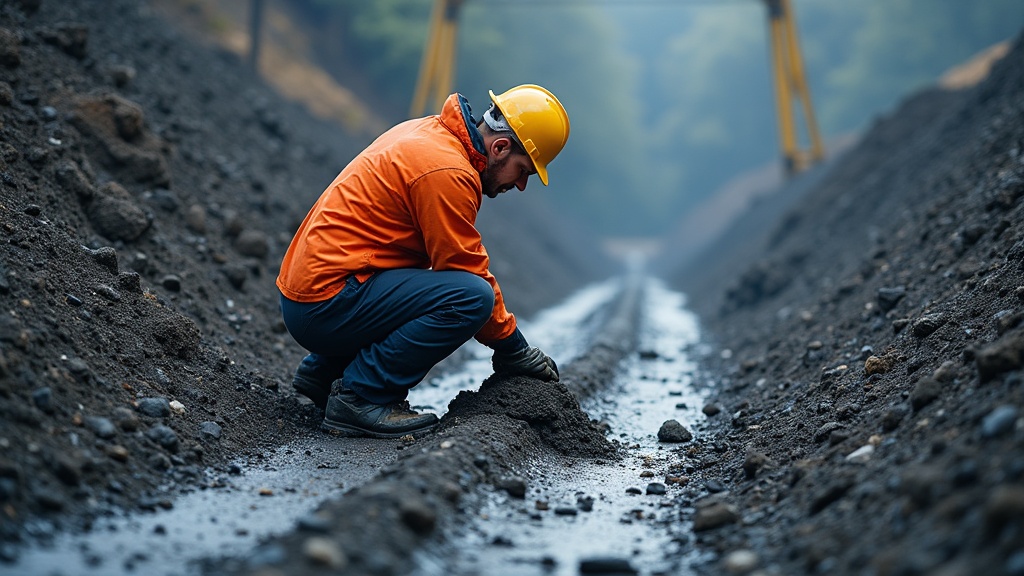
Professional Backfill Grouting in Mining: Methods & Benefits
Learn how professional backfill grouting in mining stabilizes underground voids, prevents subsidence, and protects surface infrastructure with proven techniques and materials.
Table of Contents
- What Is Backfill Grouting in Mining?
- Key Methods and Materials for Mine Backfilling
- Case Studies in Professional Backfill Grouting
- Environmental and Economic Benefits of Mine Backfill Grouting
- Frequently Asked Questions
- Comparison of Backfill Grouting Methods
- Practical Tips for Mine Backfill Projects
- Final Thoughts on Professional Backfill Grouting in Mining
Article Snapshot: Professional backfill grouting in mining is the placement of cementitious or fly ash-based materials into underground voids to stabilize mine workings and prevent surface subsidence. This article covers key methods, material selection, documented case studies, and the economic and environmental advantages of this critical mine reclamation technique.
Market Snapshot
- A documented deep mine backfilling project at Wabash Valley Correctional Institution injected 9,559 cubic yards of cement-fly ash-sand grout to mitigate subsidence risk (Marino Engineering Associates, Inc., 2014)[1].
- In a coal mining application of fly ash slurry backfill grouting, results showed a 43.46 percent filling rate of underground voids (Advancing Coal Mining Fly Ash Slurry Backfill Grouting, 2023)[2].
- Typical bulk mine fill grouting mixes are designed to achieve compressive strengths in the order of 1.0 N/mm² (Keller Group plc, 2023)[3].
Professional backfill grouting in mining is a specialized geotechnical process that has become essential for modern mine reclamation and infrastructure protection. When underground mines are abandoned or reach the end of their productive life, the voids left behind can pose serious risks of subsidence, which can damage roads, buildings, and other surface structures. By injecting engineered grout mixtures into these cavities, mining engineers can stabilize the ground, prevent collapse, and even repurpose the land for new development. This article examines the methods, materials, and real-world applications of this critical technique.
What Is Backfill Grouting in Mining?
Professional backfill grouting in mining refers to the controlled placement of flowable fill materials into underground voids created by mineral extraction. The primary goal is to fill empty spaces to provide ground support, prevent subsidence, and protect surface infrastructure. This process is distinct from other forms of grouting because it deals with large volumes of material and often requires specialized equipment to pump grout through boreholes drilled from the surface.
As mining engineer Bruce W. Brown notes, “Hydraulic flushing and grouting, using remote methods from single or multiple boreholes, are the most often-used methods for the placement of backfill material in abandoned underground mines” (CDC, 2021)[4]. This approach allows operators to treat large areas without entering hazardous underground environments. The grout mixtures themselves can vary widely depending on site conditions, but they typically include cement, fly ash, sand, and water, sometimes with additives to control setting time or flow characteristics.
The technique is particularly valuable in regions with a history of coal mining, where shallow underground workings can create a patchwork of voids beneath populated areas. In these cases, backfill grouting is often the most practical solution for mitigating subsidence risk. For homeowners and land managers, understanding the basics of this process can help when evaluating options for backfill gravel or other fill materials for smaller-scale projects.
Key Methods and Materials for Mine Backfilling
There are several established methods for professional backfill grouting in mining, each suited to different site conditions and project goals. The most common approaches include hydraulic flushing, pressurized grout injection, and bulk fill placement.
Hydraulic Flushing
Hydraulic flushing involves using water to transport backfill material through pipelines or boreholes into underground voids. This method is particularly effective for large-area backfilling because it can move high volumes of material quickly. Brown emphasizes that “hydraulic flushing remains the only cost-effective method for backfilling a large area of unstable underground mine void” (CDC, 2021)[4]. The technique relies on gravity and water pressure to distribute the fill evenly, making it ideal for abandoned mines with extensive workings.
Pressurized Grout Remote Backfilling
In pressurized grout remote backfilling, cementitious grout is pumped through cased drill holes directly into mine cavities under pressure. This method allows for precise placement of material and can achieve higher densities than gravity-fed systems. A study by the American Society of Reclamation Sciences documented this technique at abandoned mine land sites near Beulah, North Dakota, where it was used to stabilize undermined roads, buildings, and other structures (ASRS, 2021)[5].
Bulk Fill Grouting
Bulk fill grouting uses large volumes of relatively low-strength material to fill extensive voids. According to Keller Group engineers, “Bulk filling generally uses a cement/pulverised fuel ash mix to suit site conditions, with compressive strengths in the order of 1.0 N/mm², to stabilize mine cavities and protect surface infrastructure” (Keller Group plc, 2023)[3]. This approach is cost-effective for projects where high structural strength is not required, such as filling abandoned room-and-pillar mines.
Backfill Materials
The choice of backfill material depends on availability, cost, and performance requirements. Common materials include:
- Portland cement and fly ash mixtures for strength and flowability
- Pulverized coal combustion fly ash, a by-product of coal-fired power plants
- Flue gas desulfurization by-products and fluidized bed combustion residues
- Sand or crushed stone aggregates for bulk filling
These materials are often combined to achieve the desired rheological properties and final compressive strength. For those interested in advanced training on backfill grouting techniques, specialized programs cover material selection, mix design, and quality control.
Case Studies in Professional Backfill Grouting
Real-world projects demonstrate the effectiveness of professional backfill grouting in mining. One notable example is the deep mine backfilling project at Wabash Valley Correctional Institution in Indiana. Principal engineer Gennaro G. Marino reported that “the Indiana Department of Administration determined that mine backfilling was the most cost-effective solution for mine subsidence remediation of certain proposed structures” (Marino Engineering Associates, Inc., 2014)[1]. The project involved injecting 9,559 cubic yards of cement-fly ash-sand grout through 41,349 linear feet of drilling to stabilize the ground beneath the correctional facility[1].
Marino further noted that “by implementing this backfill procedure, the potential subsidence at certain Phase II structures was suppressed, and the backfilling was found to be significantly more cost-effective than designing each structure to be subsidence resistant”[1]. This case highlights how backfill grouting can save millions in construction costs while providing long-term stability.
Another significant case comes from coal mining operations, where fly ash slurry backfill grouting achieved a 43.46 percent filling rate of underground voids and a 40.63 percent reduction in surface subsidence after grouting (Advancing Coal Mining Fly Ash Slurry Backfill Grouting, 2023)[2]. These results demonstrate that even partial filling can dramatically reduce subsidence risk, making the technique viable for projects with limited budgets.
For property owners dealing with subsidence issues, the same principles apply at a smaller scale. Proper external wall insulation and foundation stabilization can also benefit from understanding how grout-based solutions work in the ground beneath structures.
Environmental and Economic Benefits of Mine Backfill Grouting
Professional backfill grouting in mining offers significant environmental and economic advantages. By filling underground voids, the technique prevents subsidence that could damage ecosystems, contaminate groundwater, or create safety hazards. The use of coal combustion by-products as backfill materials also provides a beneficial reuse for industrial waste, reducing the need for landfill disposal and lowering the carbon footprint of mining operations.
Economically, backfill grouting is often far less expensive than alternative stabilization methods. As the Wabash Valley case demonstrated, designing structures to be subsidence-resistant can be prohibitively costly compared to stabilizing the ground itself. The technique also enables the safe redevelopment of abandoned mine lands, increasing property values and tax revenues in affected areas.
The U.S. Bureau of Mines has documented that candidate backfill materials for professional grouting in coal mining include pulverized coal combustion fly ash, flue gas desulfurization by-products, and fluidized bed combustion residues from coal-fired power plants (USBM, 1992)[6]. This creates a circular economy where waste from one industry becomes a valuable resource for another.
For communities living above abandoned mines, the peace of mind that comes from knowing the ground beneath them is stable is invaluable. Professional backfill grouting in mining is not just an engineering solution; it is a public safety measure that protects homes, businesses, and critical infrastructure for generations.
Important Questions About Professional Backfill Grouting in Mining
How deep do boreholes need to be for mine backfill grouting?
The depth of boreholes depends on the depth of the mine workings, which can range from tens to hundreds of meters below the surface. In the Wabash Valley project, drilling reached depths sufficient to access the mine voids, totaling 41,349 linear feet of drilling across multiple boreholes[1]. Engineers use geological surveys and mine maps to determine the precise depth and spacing required for effective grout placement.
What is the typical compressive strength of mine backfill grout?
Typical bulk mine fill grouting mixes are designed to achieve compressive strengths in the order of 1.0 N/mm² (Keller Group plc, 2023)[3]. However, the required strength can vary based on the specific application, overburden depth, and desired level of subsidence control. Higher-strength mixes may be specified for critical structures, while lower-strength fills are adequate for general void filling.
How long does a professional backfill grouting project take?
Project duration depends on the volume of voids to be filled, the number of boreholes, and the grouting method used. Large projects like the Wabash Valley correctional facility backfilling can take several months to complete, while smaller residential or commercial projects may be finished in days or weeks. Factors such as grout curing time, weather conditions, and site access also affect the schedule.
Can backfill grouting be used for active mines or only abandoned ones?
Professional backfill grouting in mining is used in both active and abandoned mines. In active operations, backfilling can provide ground support for ongoing extraction, reduce surface subsidence during mining, and allow for more complete resource recovery. In abandoned mines, it is primarily used for reclamation and hazard mitigation. The techniques and materials are similar, though active mine backfilling often integrates with the mining cycle for greater efficiency.
Comparison of Backfill Grouting Methods
Choosing the right method for professional backfill grouting in mining depends on site conditions, project scale, and budget. The following table compares the three primary approaches discussed in this article.
| Method | Best For | Key Advantage | Typical Material |
|---|---|---|---|
| Hydraulic Flushing | Large-area voids, abandoned mines | Lowest cost per cubic yard for large volumes | Sand, fly ash, water slurry |
| Pressurized Grout Injection | Precise placement, confined voids | High density and controlled fill distribution | Cementitious grout with additives |
| Bulk Fill Grouting | Room-and-pillar mines, large cavities | Good balance of cost and strength | Cement/pulverised fuel ash mix |
Practical Tips for Mine Backfill Projects
Successful professional backfill grouting in mining requires careful planning and execution. Here are actionable tips for project managers and engineers:
- Conduct thorough site investigation: Use geophysical surveys, borehole cameras, and historical mine maps to accurately map void locations and volumes before designing the grouting program.
- Select materials based on availability and performance: Locally sourced fly ash or other coal combustion by-products can reduce costs and environmental impact while meeting strength requirements.
- Monitor grout placement in real time: Use pressure sensors, flow meters, and volume tracking to ensure voids are filled completely without over-pressurizing the surrounding rock.
- Plan for quality control testing: Take samples of the grout mix for compressive strength testing at 7, 14, and 28 days to verify that the material meets design specifications.
For those new to the field, investing in professional training on backfill grouting techniques can accelerate the learning curve and help avoid costly mistakes.
Final Thoughts on Professional Backfill Grouting in Mining
Professional backfill grouting in mining is a proven, cost-effective solution for stabilizing underground voids and preventing surface subsidence. With documented success in projects ranging from correctional facilities to coal mine reclamation, the technique offers both economic and environmental benefits. Whether you are a mining engineer, property developer, or land manager, understanding the methods and materials available can help you make informed decisions about ground stabilization. For more detailed guidance on implementing these techniques, explore the resources available at external wall insulation and related construction topics that complement subsurface stabilization work.
Learn More
- Successful Deep Mine Backfilling to Mitigate Mine Subsidence. Marino Engineering Associates, Inc.
https://meacorporation.com/wp-content/uploads/project-bulletin-01.pdf - Advancing Coal Mining Fly Ash Slurry Backfill Grouting (technical paper).
https://www.scribd.com/document/870308363/Advancing-Coal-Mining-Fly-Ash-Slurry-Backfill-Grouting - Cavity / bulk / mine fill grouting. Keller Group plc.
https://www.keller.com/expertise/techniques/cavity-bulk-mine-fill-grouting - State-of-the-Art Techniques for Backfilling Abandoned Underground Mines. CDC.
https://stacks.cdc.gov/view/cdc/206318/cdc_206318_DS1.pdf - Pressurized Grout Remote Backfilling at Abandoned Mine Land Sites. American Society of Reclamation Sciences.
https://www.asrs.us/wp-content/uploads/2021/09/0366-Weiner.pdf - Candidate Backfill Materials for Professional Grouting in Coal Mining. U.S. Bureau of Mines.
https://stacks.cdc.gov/view/cdc/235651/cdc_235651_DS1.pdf