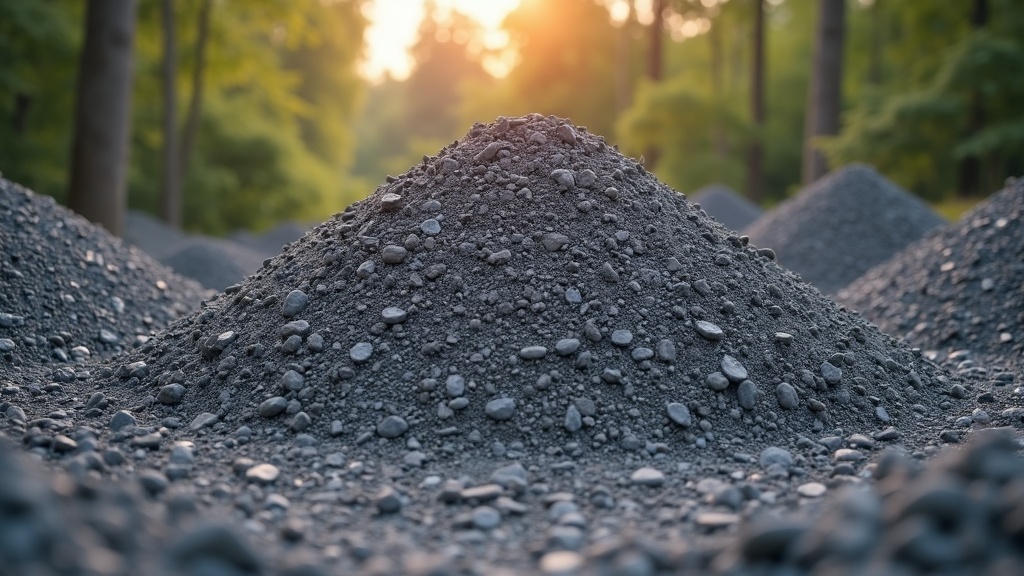
Backfill Gravel for Drainage and Stability
Backfill gravel improves drainage and stability for ornamental trees, retaining walls, and foundations. Learn essential geotechnical specs and practical landscaping tips here.
Table of Contents
- Enhancing Drainage and Foundation Stability
- Structural Support for Retaining Walls
- Compaction and Placement Best Practices
- Material Selection and Quality Control
- Important Questions About Backfill Gravel
- Comparing Subsurface Materials
- Practical Landscaping and Engineering Tips
Article Snapshot
Backfill gravel is a coarse, free-draining aggregate used to stabilize foundations, retaining walls, and landscape beds. It reduces lateral earth pressure, prevents frost heave, and ensures proper water dissipation in both residential gardening and large-scale civil projects.
By the Numbers
- The minimum internal friction angle specified for granular backfill used in highway mechanically stabilized earth walls is 34 degrees (Federal Highway Administration, 2025)[1].
- The recommended maximum fines content for gravel backfill used in retaining walls is 15 percent passing the No. 200 sieve by weight (Federal Highway Administration, 2025)[1].
- Replacing native silty soil with compacted material under shallow foundations yields a 40 percent increase in ultimate bearing capacity (University of Kansas Transportation Center, 2025)[2].
Landscaping with ornamental trees and building sturdy garden retaining walls both rely on proper subsurface materials. When preparing a site, backfill gravel plays a vital role in ensuring long-term structural integrity and plant health. This coarse aggregate provides essential drainage, preventing water from pooling around delicate root systems or compromising concrete foundations. While home gardeners use it to protect landscape grading and prevent frost heave, civil engineers rely on the same principles for massive highway structures. This article explores the geotechnical properties, placement techniques, and practical applications of this versatile material across both residential and industrial settings.
Enhancing Drainage and Foundation Stability
Proper water management is the primary reason professionals choose granular materials for subsurface support. When soil retains too much moisture, it expands and contracts with temperature changes, leading to severe structural damage. Using gravel for backfill around residential and commercial foundations mitigates these risks by creating a highly permeable zone. According to the National Ready Mixed Concrete Association, using uniformly graded gravel as structural backfill around foundations reduces differential settlement and helps keep water away from concrete elements (Bigelow, 2025)[3].
In colder climates, moisture trapped in native soil freezes and expands, causing upward movement known as frost heave. To combat this, experts recommend maintaining a specific distance between the finished grade and the top of the aggregate layer. The recommended minimum distance from the finished grade to the top of the material around residential foundations in cold climates is 450 millimeters to reduce frost-related heave (National Ready Mixed Concrete Association, 2025)[3]. This ensures that surface water does not easily penetrate the critical foundation zone.
For the material to function correctly, it must allow water to pass through rapidly. The typical design permeability for clean material placed behind highway retaining walls to ensure adequate drainage is 1 centimeter per second minimum hydraulic conductivity (Massachusetts Department of Transportation, 2025)[4]. This high flow rate prevents hydrostatic pressure from building up against basement walls or garden planters, keeping both structures and ornamental plant roots safe from waterlogging.
Structural Support for Retaining Walls
Retaining structures in both ornamental gardens and highway projects depend heavily on the shear strength of the material placed behind them. When building a terraced garden for creeping hemlocks or a massive mechanically stabilized earth wall for a roadway, the lateral earth pressure exerted by the soil must be carefully managed. Clean, free-draining granular backfill such as crushed stone or coarse gravel behind a retaining structure is one of the simplest ways to reduce this pressure (Brown, 2025)[4].
The physical dimensions of the drainage zone are strictly regulated in civil engineering. The recommended gravel backfill thickness directly behind retaining wall stems in transportation applications is 300 millimeters minimum thickness (Massachusetts Department of Transportation, 2025)[4]. This thick column of aggregate acts as a buffer, intercepting groundwater before it can saturate the retained soil mass.
Particle size also plays a crucial role in maintaining this structural buffer. The recommended gradation size range for material behind retaining walls in transportation projects is 19 millimeters maximum particle size with most particles between 9.5 and 19 mm (Massachusetts Department of Transportation, 2025)[4]. This specific grading ensures that the void spaces between rocks are large enough to facilitate rapid water flow, yet small enough to prevent the surrounding native soil from migrating into the drainage zone and clogging the system.
Compaction and Placement Best Practices
Achieving the desired bearing capacity requires strict adherence to compaction protocols during placement. Simply dumping aggregate into a trench is insufficient for both heavy civil projects and structural landscape features. Gravel backfill placed in thin lifts and compacted to a high relative density can substantially increase the bearing capacity of the underlying subgrade (Parsons, 2025)[2].
To achieve optimal density, contractors must control the depth of each layer added to the trench. The maximum allowable compacted lift thickness for material placed behind mechanically stabilized earth walls when using typical vibratory plate or roller equipment is 200 millimeters per lift (Federal Highway Administration, 2025)[1]. Thicker layers prevent the compaction energy from reaching the bottom of the lift, resulting in loose, unstable pockets that can settle over time.
The overall density target is equally stringent. The minimum relative compaction required for granular material beneath highway foundations based on modified Proctor tests is 95 percent of maximum dry density (Purdue University School of Civil Engineering, 2025)[5]. While garden beds require simple tamping, industrial sites like mines use specialized techniques. For instance, advanced specialized backfill grouting techniques for deep mine stabilization ensure deep void stabilization where standard aggregate cannot reach, demonstrating how placement methods scale from residential landscaping to heavy extraction industries.
Material Selection and Quality Control
The physical properties of the aggregate directly dictate the long-term performance of the entire structural system. Not all crushed stone or coarse aggregate is suitable as backfill stone for structural use. Well-graded, compacted gravel backfill provides higher shear strength and lower compressibility than most cohesive soils (Prezzi, 2025)[5], making it the preferred choice for critical infrastructure and high-end hardscaping.
The shape of the individual particles heavily influences how well the material locks together under pressure. The maximum allowable percentage of flat or elongated particles in material for highway structures to maintain compaction quality is 10 percent by weight (Purdue University School of Civil Engineering, 2025)[5]. Angular, cubical particles interlock mechanically, providing superior resistance to shifting compared to smooth, rounded river rocks.
Purity is another major factor, particularly when dealing with metal reinforcements in the soil. For mechanically stabilized earth walls, clean gravel or crushed stone with limited fines is recommended because it minimizes corrosion potential (Anderson, 2025)[1]. Excessive clay or silt fines can trap moisture against steel geogrids or metal wall ties, accelerating rust and compromising the wall’s structural integrity over decades of service.
Important Questions About Backfill Gravel
What is the difference between backfill gravel and regular soil?
Regular soil, especially clay-heavy varieties, retains water and expands when frozen, which can crack foundations and retaining walls. This specific aggregate is composed of coarse, angular stones that create large void spaces. These voids allow water to drain rapidly away from structures, preventing hydrostatic pressure buildup and eliminating the risk of frost heave that plagues standard native soils.
Can I use backfill gravel for planting ornamental trees?
You should not plant ornamental trees directly into pure coarse aggregate, as it lacks the nutrients and moisture retention required for root establishment. However, it is highly beneficial when used in the surrounding drainage trenches or at the base of the planting hole in heavy clay soils. This improves subgrade drainage, preventing the tree’s root ball from sitting in stagnant water and reducing the likelihood of root rot.
How thick should the gravel layer be behind a garden retaining wall?
For small residential garden walls, a minimum thickness of 150 to 300 millimeters directly behind the wall stem is generally recommended. This column of aggregate should be wrapped in a permeable geotextile fabric to prevent the surrounding garden soil from washing into the voids. For larger, engineered mechanically stabilized earth walls, civil engineering guidelines strictly mandate a minimum 300-millimeter thickness to ensure adequate hydraulic conductivity.
Does backfill gravel need to be compacted?
Yes, compaction is essential for structural applications. While the material is naturally free-draining, loose aggregate will settle over time under the weight of overlying structures or traffic. Contractors must place the material in thin lifts, typically no thicker than 200 millimeters, and use vibratory plates or rollers to achieve at least 95 percent of its maximum dry density, ensuring a stable, unyielding foundation.
Comparing Subsurface Materials
Selecting the right subsurface material depends on the specific drainage and load-bearing requirements of the project. While native soil is readily available, it often fails to provide the necessary permeability for structural support. The following table contrasts different approaches to subsurface filling.
| Material Type | Drainage Capacity | Compaction Effort | Best Application |
|---|---|---|---|
| Backfill gravel | Excellent | Moderate (requires thin lifts) | Retaining walls, foundation drainage |
| Native Clay Soil | Poor | High (moisture dependent) | General grading, non-structural berms |
| Flowable Fill (CLSM) | Low | None (self-leveling) | Utility trench backfill, void filling |
Practical Landscaping and Engineering Tips
Implementing best practices ensures that your hardscaping and foundation projects stand the test of time. Always wrap your drainage aggregate in a non-woven geotextile fabric before covering it with native soil. This critical step prevents fine silt and clay particles from migrating into the stone voids, which would otherwise clog the system and destroy its permeability.
When ordering materials, specify washed or clean crushed stone to ensure the fines content remains below 15 percent. For landscaping businesses looking to grow their client base, highlighting your expertise in proper drainage installation is a great selling point. Applying a solid marketing SEO strategy can help you attract homeowners searching for reliable hardscaping and foundation waterproofing services.
Furthermore, staying updated on industry standards is crucial for commercial contractors. Reviewing the Federal Highway Administration guidelines for mechanically stabilized earth walls provides deep insights into material gradation and compaction testing. Finally, modern landscaping firms can leverage technology to streamline their operations; utilizing AI-driven SEO tools allows companies to optimize their project portfolios and reach a wider digital audience efficiently.
Key Takeaways
From protecting delicate ornamental tree roots to stabilizing massive highway retaining walls, backfill gravel is an indispensable material in modern construction and landscaping. Its superior drainage capabilities, high shear strength, and resistance to frost heave make it the gold standard for subsurface support. By adhering to strict compaction protocols and selecting clean, well-graded aggregate, you ensure the longevity of any structural project. For more advice on creating stable, beautiful landscapes, read our ornamental tree planting and care guides.
Useful Resources
- Technical Manual for Design and Construction of MSE Walls. Federal Highway Administration.
https://www.fhwa.dot.gov/engineering/geotech/pubs/mse_manual/msewalls.pdf - Effect of Granular Backfill Compaction on Shallow Foundation Performance. University of Kansas Transportation Center.
https://kutc.ku.edu/sites/kutc.ku.edu/files/docs/gravel-backfill-foundation-performance.pdf - Recommendations for Residential Foundation Backfill and Drainage. National Ready Mixed Concrete Association.
https://www.nrmca.org/wp-content/uploads/2025/04/foundation-backfill-drainage-guide.pdf - Guidelines for Design of Highway Retaining Walls and Slope Stabilization. Massachusetts Department of Transportation.
https://www.mass.gov/doc/guidelines-for-design-of-highway-retaining-walls/download - Granular Backfill Performance for Mechanically Stabilized Structures. Purdue University School of Civil Engineering.
https://engineering.purdue.edu/CE/geo/papers/granular-backfill-performance-mse-walls.pdf