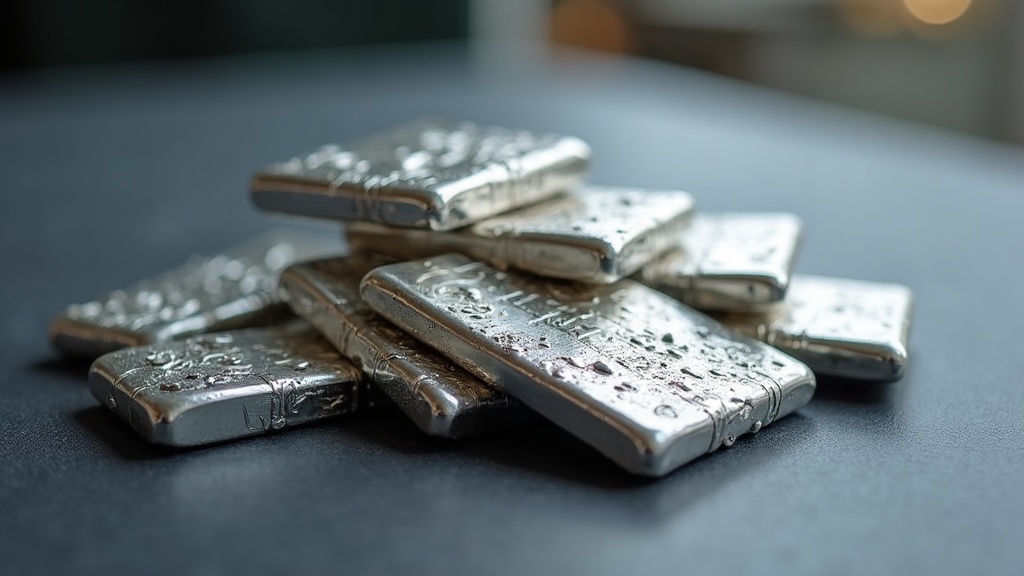
Understanding Silver Prices Today and Market Trends
Discover how silver prices today are shaped by industrial demand, photovoltaics, and macroeconomic shifts. Explore current market trends and expert insights.
Table of Contents
- Article Snapshot
- Silver Prices Today in Context
- Introduction
- Understanding the Drivers Behind Silver Prices Today
- Macroeconomic Factors and Market Volatility
- Analyzing Recent Highs and Corrections
- Future Trajectories and Industrial Consumption
- Important Questions About Silver Prices Today
- Investment Approaches Compared
- Practical Tips for Investors
- Wrapping Up
Article Snapshot
Silver prices today reflect the current market valuation of the precious metal, driven heavily by industrial utility and investment demand. This brief summary covers recent market volatility, structural cleantech shifts, and expert forecasts shaping the broader commodity trading landscape for physical silver and bullion.
Silver Prices Today in Context
- The live spot price per troy ounce in the U.S. market was quoted at 64.83 US dollars per troy ounce on June 9, 2026 (Trading Economics, 2026)[1].
- On the same date, the metal declined by 4.87 percent daily decline from the previous trading day (Trading Economics, 2026)[1].
- The nominal all-time high price was recorded at 121.67 US dollars per troy ounce on January 29, 2026 (APMEX, 2026)[2].
Introduction
Silver prices today remain a focal point for investors and industrial buyers navigating a complex global economy. The precious metal operates at the intersection of monetary history and modern technological necessity. When evaluating current silver prices, market participants must weigh safe-haven asset appeal against robust industrial demand from sectors like photovoltaics and cleantech deployment. This dynamic creates unique market volatility that distinguishes the metal from other commodities.
In this guide, we will explore the primary drivers influencing live silver prices, examine recent market data, and review expert perspectives on future trajectories. Whether you are tracking physical silver, silver coins, or broader commodity trading trends, understanding these underlying forces is essential. We will also discuss how macroeconomic uncertainty and geopolitical risk continue to shape the spot market, providing a comprehensive overview for both seasoned analysts and newcomers to the bullion space.
Understanding the Drivers Behind Silver Prices Today
The valuation of this precious metal is uniquely influenced by its dual role as both a monetary asset and a critical industrial input. Unlike gold, a significant portion of physical silver is consumed in manufacturing. This structural demand story has become prominent as the global energy transition accelerates. Photovoltaics require substantial amounts of the metal, directly linking the commodity to cleantech deployment.
Nitesh Shah, Head of Commodities and Macroeconomic Research at WisdomTree Europe, notes that the metal is “driven not just by safe-haven demand, but increasingly by expectations around the energy transition” (WisdomTree Europe, 2026)[3]. When investors check live silver prices, they observe a tug-of-war between traditional investment demand and modern industrial consumption. During economic expansion, manufacturing ramps up, driving up the spot market valuation. Conversely, during downturns, its status as a safe-haven asset attracts capital.
For those interested in how we synthesize complex market data, our detailed article creation process outlines the rigorous research methodologies we employ to track these shifting commodity trading trends and mining supply constraints.
Macroeconomic Factors and Market Volatility
Broader economic conditions and global uncertainties play a pivotal role in dictating short-term fluctuations in the spot market. The metal is highly sensitive to interest rate decisions and currency valuations. When real interest rates fall, non-yielding assets become more attractive, rapidly inflating valuations.
Carsten Menke, Head of Next Generation Research at Julius Baer, explains that valuations “embed a significant risk premium linked to broader macro and geopolitical uncertainty” (Julius Baer, 2026)[4]. The psychological aspect of commodity trading amplifies this market volatility. Philip Newman, Managing Director at Metals Focus, states that “silver remains highly leveraged to shifts in investor sentiment” (Metals Focus, 2026)[5].
Understanding these macro drivers is crucial, and utilizing comprehensive search pages can help researchers find historical data to contextualize these sentiment-driven swings and better evaluate today’s silver prices against long-term baselines.
Analyzing Recent Highs and Corrections
Examining historical milestones provides essential context for understanding current valuations. The metal has experienced dramatic rallies, often culminating in spectacular peaks. Recently, the nominal all-time high price was recorded at 121.67 US dollars per troy ounce on January 29, 2026 (APMEX, 2026)[2]. This peak was driven by supply chain disruptions and intense safe-haven buying.
However, such extreme valuations are rarely sustainable. Following this peak, the market underwent a significant correction. By late May 2026, a major bullion retailer quoted the metal trading at 70.55 US dollars per troy ounce during a recent U.S. trading session (JM Bullion, 2026)[6]. While a substantial pullback, it still reflects a historically elevated baseline.
This pattern of explosive growth followed by sharp corrections is a hallmark of the asset’s trading history. Investors tracking physical silver or silver coins must be prepared for this inherent market volatility. Furthermore, external resources like the United States Geological Survey mineral reports provide valuable data on global mine production that helps explain these supply-side constraints.
Future Trajectories and Industrial Consumption
Long-term forecasts suggest that structural deficits and evolving technological applications will continue to underpin the asset’s valuation. The transition to renewable energy is a multi-decade global imperative. As nations strive to meet carbon neutrality targets, solar infrastructure deployment will require millions of additional ounces annually, creating a high floor for valuations.
This positions the asset as a critical strategic material for the modern economy. Monitoring leading indicators in the semiconductor and solar industries will be essential for accurately forecasting future movements in the spot market. Ultimately, the interplay between green technology adoption and traditional monetary hedging will define the next era of commodity trading, offering both significant opportunities and notable risks for market participants evaluating silver spot prices today.
Important Questions About Silver Prices Today
Why do live silver prices fluctuate so much during a single trading day?
Live silver prices fluctuate significantly due to the metal’s relatively small market size compared to gold or equities. This lower liquidity means that large institutional trades or sudden shifts in macroeconomic data can cause outsized price movements. Additionally, the asset is heavily traded in the derivatives market, where leverage can amplify both upward and downward momentum. Industrial buyers adjusting their procurement strategies and speculative funds rebalancing their portfolios also contribute to intraday market volatility, making the spot market highly reactive to real-time news and economic indicators.
How does the gold-to-silver ratio impact investment decisions?
The gold-to-silver ratio measures how many ounces of the white metal are required to purchase one ounce of gold. Investors use this metric to determine relative value; a historically high ratio suggests the white metal is undervalued compared to gold, potentially signaling a buying opportunity. Conversely, a low ratio indicates it might be overvalued. Because the white metal typically exhibits higher market volatility, it often outperforms gold during precious metal bull markets, causing the ratio to compress. Monitoring this relationship helps portfolio managers allocate capital efficiently between the two monetary metals.
What role do photovoltaics play in current silver prices?
Photovoltaics, or solar panel manufacturing, represent one of the fastest-growing segments of industrial demand for the metal. Modern solar cells rely heavily on its superior electrical conductivity to efficiently capture and transmit energy. As global initiatives accelerate the transition to renewable energy, the volume of metal consumed by the solar industry has surged, creating structural supply deficits. This robust consumption acts as a fundamental price floor, ensuring that even when investment demand wanes, the physical requirements of the energy transition continue to support elevated valuations in the spot market.
Is physical silver a better investment than mining stocks?
Physical silver, such as bullion bars and silver coins, offers direct exposure to the spot market and serves as a tangible safe-haven asset without counterparty risk. In contrast, mining stocks provide leveraged exposure; their profitability amplifies when spot valuations rise, potentially offering higher returns. However, mining equities also carry operational, geopolitical, and management risks that physical bullion does not. Investors seeking pure price appreciation and wealth preservation often prefer physical metal, while those willing to accept higher risk for potentially greater yields might allocate capital to diversified mining portfolios.
Investment Approaches Compared
Evaluating different methods for gaining exposure to the precious metals market requires understanding the distinct advantages and drawbacks of each approach. Investors typically choose between holding physical assets, trading futures contracts, or purchasing exchange-traded funds based on their risk tolerance and liquidity needs.
| Investment Method | Liquidity | Counterparty Risk | Best For |
|---|---|---|---|
| Physical Bullion | Low | None | Long-term wealth preservation |
| Futures Contracts | High | High | Active commodity trading |
| Precious Metal ETFs | High | Moderate | Convenient portfolio allocation |
| Mining Equities | Moderate | High | Leveraged growth potential |
Each method interacts differently with silver prices today, meaning investors must align their choice with their overarching financial strategy, time horizon, and specific market outlook to optimize their precious metals allocation.
Practical Tips for Investors
Navigating the precious metals market requires a disciplined approach and a clear understanding of your financial objectives. First, always monitor the broader macroeconomic environment, particularly central bank interest rate policies and inflation metrics, as these heavily influence non-yielding assets. Second, consider dollar-cost averaging when accumulating physical silver or bullion; this strategy mitigates the impact of short-term market volatility by spreading purchases over time.
Third, stay informed about industrial demand trends, especially in the photovoltaics and electric vehicle sectors. The energy transition is a structural tailwind that could sustain higher price floors for decades. Fourth, if you are storing physical metal, ensure you use secure, insured storage solutions to protect your wealth from theft or damage.
Finally, avoid making emotional decisions based on daily price spikes or sudden corrections. The metal is notorious for sharp, sentiment-driven movements that can trap inexperienced traders. By focusing on long-term fundamentals and maintaining a diversified portfolio, you can effectively leverage the unique characteristics of this versatile commodity. For those interested in socially conscious investments, exploring initiatives like the cats in prison rehabilitation program shows how precious metal industries and related artisans can support meaningful community projects.
Wrapping Up
The landscape of precious metals continues to evolve, driven by a complex interplay of industrial necessity and traditional investment demand. As we have explored, silver prices today are shaped by everything from photovoltaic manufacturing to macroeconomic uncertainty and geopolitical risk. Whether you are a seasoned commodity trader or a newcomer looking to diversify your portfolio with physical silver, understanding these underlying drivers is crucial for long-term success. The transition to renewable energy ensures the metal will remain a critical component of the global economy. To stay updated on the latest market trends and investment strategies, continue exploring the insightful resources available on creepinghemlock.com.
Sources & Citations
- Silver Commodity Data. Trading Economics.
https://tradingeconomics.com/commodity/silver - Silver Price History. APMEX.
https://www.apmex.com/silver-price - Silver’s structural demand story in the energy transition era. WisdomTree Europe.
https://www.wisdomtree.eu/en-gb/blog/2026-03-18/silvers-structural-demand-story-in-the-energy-transition-era - Julius Baer: Silver – balancing industrial and investment demand. Julius Baer.
https://www.juliusbaer.com/en/insights/markets/silver-balancing-industrial-and-investment-demand - Global Silver Survey 2026 – Key Themes and Price Drivers. Metals Focus.
https://www.metalsfocus.com/global-silver-survey-2026-key-themes-and-price-drivers - Silver Price Charts. JM Bullion.
https://www.jmbullion.com/charts/silver-prices/
For more about Silver prices today, see Silver Prices Today.