Backfill Slurry: The Complete Guide for Mining Operations
Learn how backfill slurry supports underground mine stability and waste management. This guide covers composition, performance data, and practical applications for mining engineers and operators.
Table of Contents
- What Is Backfill Slurry?
- Composition and Mix Design
- Flow and Transport Characteristics
- Market and Applications
- Frequently Asked Questions
- Comparison of Backfill Methods
- Practical Tips for Backfill Slurry Operations
Backfill Slurry in Context
- The global mine backfill services market is projected to reach USD 8.6 billion by 2033 (Persistence Market Research, 2026)[1].
- The market is projected to grow from USD 5.1 billion in 2026 at a CAGR of 7.8% (Persistence Market Research, 2026)[1].
- A native slurry backfill service can achieve a daily production capacity of 100-600 cubic yards (Griffin Soil Group, 2026)[2].
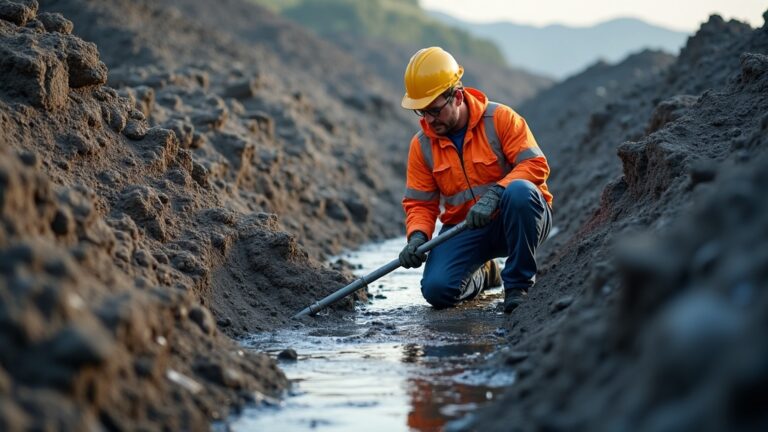
Underground mining generates large volumes of void space that must be filled to prevent collapse and allow for continued extraction. Backfill slurry has become a standard solution in modern mining operations. It transforms mine waste into a structural material that supports the surrounding rock mass. This article examines the composition, flow behavior, and market trends for backfill slurry, drawing on recent research and industry data.
What Is Backfill Slurry?
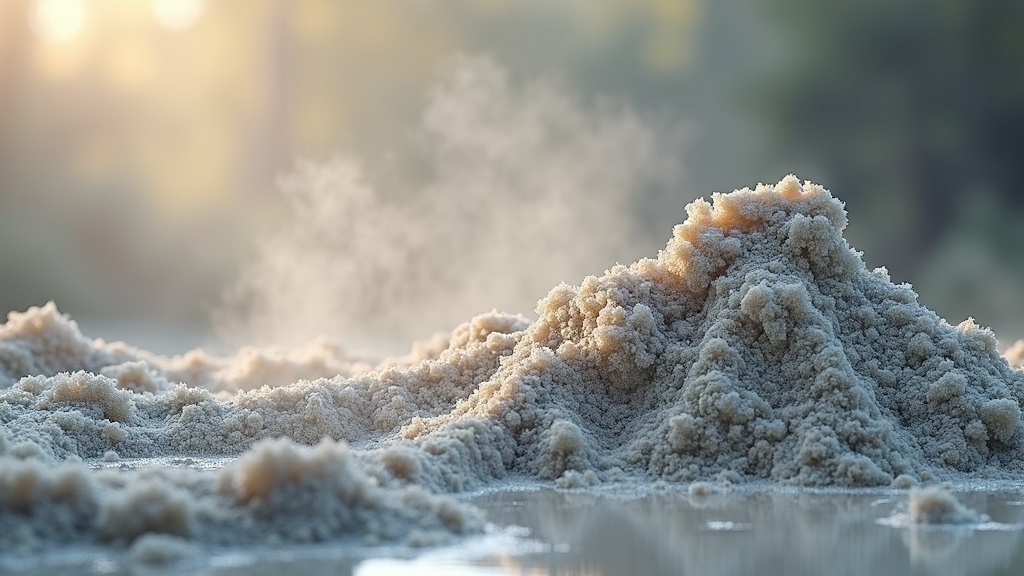
Backfill slurry is a pumpable suspension of mill tailings, water, and often a cementitious binder that is transported underground to fill mined-out cavities. The mixture must remain stable during transport and then set to form a solid mass that can bear load. The slurry mass concentration is a key parameter that determines both flowability and final strength. In semi-industrial loop tests, researchers found that the slurry mass concentration increased to 76% when the cement-to-tailings ratio reached a specific level (PMC, 2024)[3]. This finding shows that adjusting the binder content allows operators to fine-tune the slurry for different underground conditions. The goal is to create a material that is fluid enough to travel through pipes but stiff enough to provide support once in place. Backfill slurry is also an environmentally beneficial practice because it reduces the surface storage of tailings, lowering the risk of dam failures and dust generation.
Composition and Mix Design
The composition of backfill slurry varies depending on the type of ore, the available tailings, and the required strength of the final fill. The main components are tailings, water, and a binder such as Portland cement or fly ash. An SSRN study concluded that an optimal cement-to-tailings mass ratio of 1:4 with a mass concentration of about 74% delivers the best performance for backfill slurry (SSRN, 2024)[4]. Operators can use this ratio as a starting point and then adjust based on site-specific tests. The particle size distribution of the tailings also matters. Coarser particles increase permeability and strength, while finer particles improve pumpability but may require more binder. A well-designed mix reduces binder costs, which are often the largest expense in backfill operations. Many mines now use online rheology monitoring to adjust the mix in real time, ensuring consistent quality even when tailings characteristics change.
Binder Selection
The choice of binder affects both the cost and the environmental footprint of backfill slurry. Portland cement is the most common binder, but it has a high carbon footprint. Alternative binders such as ground granulated blast furnace slag or fly ash can replace a portion of the cement without sacrificing strength. Some operations have also experimented with geopolymer binders, which use alkali activation of industrial by-products. The optimal binder dosage depends on the target unconfined compressive strength, which is typically 1 to 4 megapascals for most mining applications. A lower binder content saves money but may require longer curing times before the next mining cycle can begin.
Flow and Transport Characteristics
The ability to pump backfill slurry through long pipelines is essential for efficient mine operations. The slurry must have a low enough yield stress to flow under pressure but enough viscosity to prevent segregation of solids. A loop-test study on modified backfill slurry reported a mass concentration range of 64-72% and a flow rate range of 1.0-2.7 meters per second (Nature Scientific Reports, 2025)[5]. These parameters provide a practical operating window for most mines. If the flow rate is too low, solids settle out and block the pipe. If it is too high, the pipe wears out quickly and energy costs increase. Many modern mines use computational fluid dynamics models to simulate slurry flow and optimize the pipeline design before installation. This approach reduces the risk of blockages and extends the life of the pipe network.
Rheology Monitoring
Real-time rheology monitoring is becoming more common in large mining operations. Sensors placed along the pipeline measure pressure drop, density, and flow rate. These data feed into a control system that can adjust the water or binder addition at the mixing plant. When the slurry becomes too thick, the system adds a small amount of water to restore flowability. When it becomes too thin, it increases the binder dose. This closed-loop control ensures consistent fill quality and reduces the risk of pipeline blockages. The cost of the monitoring equipment is often recovered within a few months through reduced downtime and lower maintenance costs.
Market and Applications
The demand for backfill slurry is growing as mines go deeper and regulations on tailings storage become stricter. The global mine backfill services market is projected to grow from USD 5.1 billion in 2026 to USD 8.6 billion by 2033, at a compound annual growth rate of 7.8% (Persistence Market Research, 2026)[1]. This growth is driven by the increasing adoption of backfill in both new and existing mines. For example, a native slurry backfill service can achieve a daily production capacity of 100-600 cubic yards (Griffin Soil Group, 2026)[2], which is sufficient for many mid-sized operations. The largest application is in cut-and-fill mining, where backfill slurry is placed directly after ore removal to provide a working platform for the next lift. Other applications include secondary recovery of pillars and the filling of abandoned stopes to prevent surface subsidence. For more detailed information on system design and material selection, mining engineers can review the backfill slurry design guidelines provided by industry specialists.
The environmental benefits of backfill slurry are also driving adoption. By placing tailings underground, mines eliminate the need for new surface tailings dams, which have a history of catastrophic failures. Backfill also reduces the visual impact of mining and lowers the long-term rehabilitation costs. In some jurisdictions, regulators now require a backfill plan as part of the mine permit application. This trend is expected to continue as the public and governments demand more sustainable mining practices.
Important Questions About Backfill Slurry
What is the ideal cement-to-tailings ratio for backfill slurry?
What flow rate is recommended for pumping backfill slurry?
How does backfill slurry benefit the environment?
What is the projected growth of the mine backfill services market?
Comparison of Backfill Methods
Different backfill methods exist, each with strengths and weaknesses. The choice depends on the mine’s geology, depth, and available materials. The table below compares three common approaches.
| Method | Material | Strength | Cost | Application |
|---|---|---|---|---|
| Backfill Slurry | Tailings + water + binder | 1-4 MPa | Medium | Cut-and-fill, stoping |
| Paste Fill | Thickened tailings + binder | 2-6 MPa | High | Deep mines, high stress |
| Rock Fill | Crushed rock + cement | 3-8 MPa | High | Large voids, primary support |
Backfill slurry offers a good balance of cost and performance for most operations. Paste fill provides higher strength but requires dewatering equipment. Rock fill is strongest but has the highest material handling cost.
Practical Tips for Backfill Slurry Operations
Operators can improve the reliability and cost-effectiveness of their backfill slurry systems by following these practical guidelines. First, invest in a rheology monitoring system to track slurry properties in real time. This allows for immediate adjustments when conditions change. Second, test the tailings particle size distribution regularly. Changes in the mill feed can alter the tailings characteristics and affect the slurry behavior. Third, start with the 1:4 cement-to-tailings ratio as a baseline and adjust based on strength testing. Over-cementing wastes money, while under-cementing risks ground failure. Fourth, maintain a consistent slurry mass concentration between 64% and 72% to keep the flow rate in the 1.0-2.7 m/s range. Fifth, schedule regular pipe inspections and rotate sections that show signs of wear. A proactive maintenance program prevents costly blockages and unplanned downtime.
The Bottom Line
Backfill slurry is a proven technology that supports safe and efficient underground mining. By understanding the optimal mix design, flow characteristics, and market trends, operators can reduce costs and improve environmental performance. The global market is growing at 7.8% annually, reflecting the increasing importance of backfill in modern mining. To learn more about system design and implementation, visit the backfill slurry technical resources page for detailed guidance.
References
- Mine Backfill Services Market Report. Persistence Market Research.
https://www.persistencemarketresearch.com/market-research/mine-backfill-services-market.asp - Native Slurry Backfill (NSB) Service. Griffin Soil Group.
http://www.griffinsoilgroup.com/native-slurry-backfill-nsb/ - Semi-industrial Loop Test Study on Backfill Slurry. PMC (PubMed Central).
https://pmc.ncbi.nlm.nih.gov/articles/PMC11123139/ - Optimal Cement-to-Tailings Ratio for Backfill Slurry. SSRN.
https://papers.ssrn.com/sol3/papers.cfm?abstract_id=4747774 - Loop-Test Study on Modified Backfill Slurry. Nature Scientific Reports.
https://www.nature.com/articles/s41598-025-23924-w